



Language, Morality, and Cultural Identity: An Anthropolinguistic Analysis of Selected Meitei Folktales of Manipur
The lecture by Dr. Aribam Bijayasundari Devi explored the interrelationship between language, morality and cultural identity through an anthropolinguistic analysis of selected Meitei folktales from Manipur. It examined how narrative structures, linguistic expressions and moral themes embedded in these tales reflect and reinforce Meitei cultural identity. The study highlighted that folktales serve not merely as sources of entertainment but also as important vehicles for transmitting social norms, moral values and community traditions. It emphasized the role of oral narratives in maintaining cultural continuity and preserving Meitei heritage in a rapidly changing social environment.
Watch the Video
Causative Construction in Kumauni and Garhwali: A Comparative Morpho-syntactic Analysis
Nilanjana Sen, Research Scholar, presented a comparative analysis of causative constructions in Kumauni and Garhwali. The paper examined their morpho-syntactic patterns, highlighting similarities and differences in the formation and use of causative constructions in the two closely related Pahari languages. Prof. Kakali Mukherjee participated as the expert discussant, and her insightful observations and constructive suggestions made the session highly enriching for the presenter and the participants.
Watch the Video
A Pilot Study of the Cognitive Environment of Bhojpuri Idioms
Adwitee Verma, Research Scholar, University of Lucknow, presented a pilot study exploring the cognitive mechanisms underlying the understanding and use of Bhojpuri idioms. The study examined how cultural experience, shared knowledge and linguistic structures contribute to idiom comprehension. It highlighted the richness of Bhojpuri conceptual metaphors, particularly those rooted in agriculture, social structures, oral traditions and bodily experience. The paper demonstrated how idioms reflect the cognitive and cultural worldview of Bhojpuri speakers.
Watch the Video

Identity, Language and Culture of Saora in Odisha
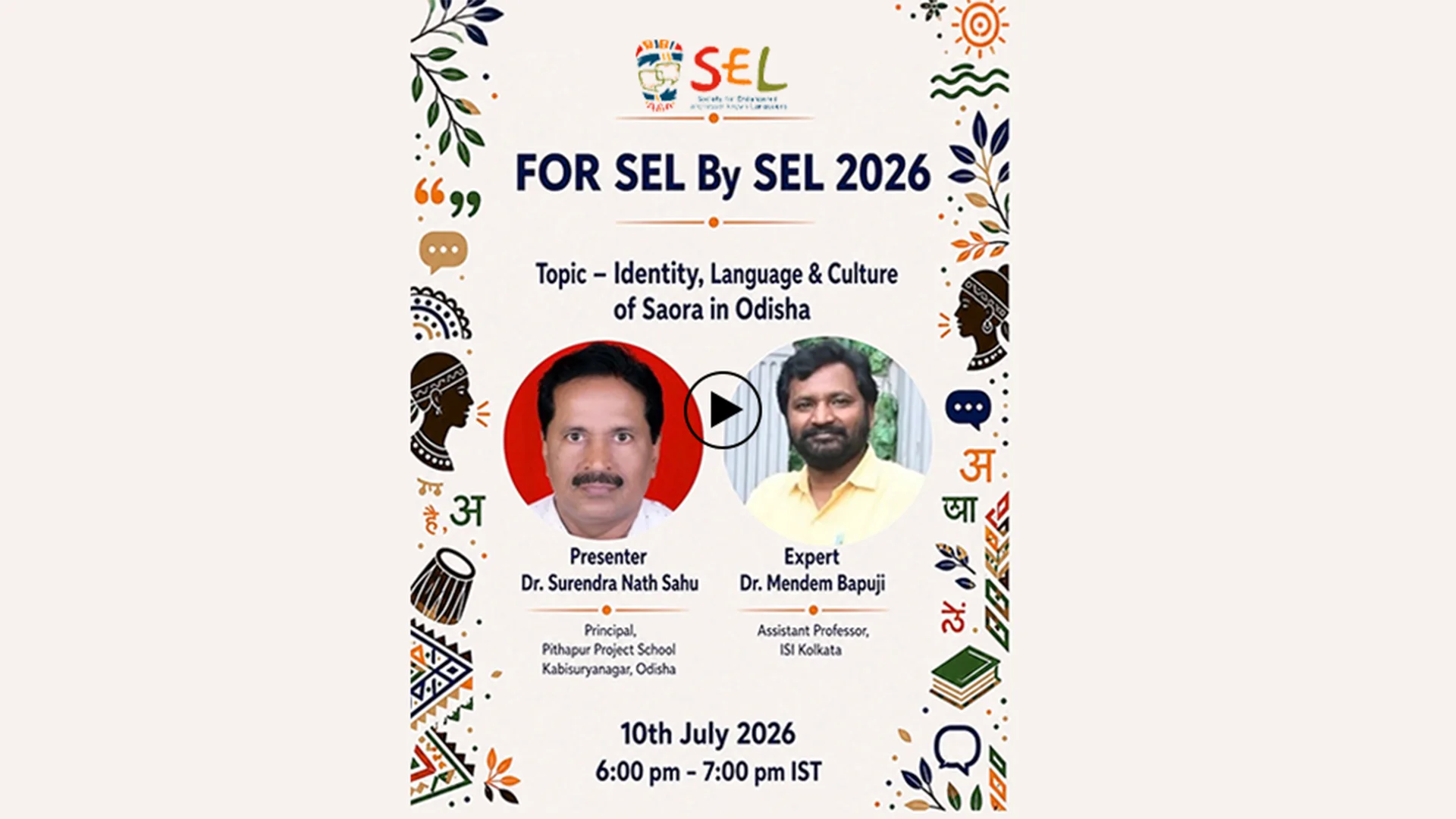
The Yearly Lecture Series of SEL featured an informative lecture by Dr. Surendra Nath Sahu, Principal, Pithapur Project School, Odisha, on “Identity, Language and Culture of Saora in Odisha.” The lecture highlighted the linguistic and cultural identity of the Saora community, a Particularly Vulnerable Tribal Group of Odisha. Dr. Sahu discussed the Sora language, Saora script, traditional beliefs, myths, folk songs, dances, rituals and IdItal traditions. He emphasized the community’s strong attachment to its language and the need to preserve its rich cultural heritage. The lecture also highlighted the importance of incorporating traditional knowledge and practices into development initiatives for the Saora community.
Watch the Video
Case Marking Patterns in Dhimal and Kurux: A Contact Perspective
The paper by Shuvam Dutta examined the case-marking systems of Dhimal, an endangered Tibeto-Burman language, and Kurux, a vulnerable Dravidian language, spoken in West Bengal. It focused on case-marking strategies, Differential Object Marking (DOM), animacy-based distinctions and case syncretism, particularly from the perspective of language contact. The study highlighted the influence of prolonged multilingual contact, especially with Bangla, on the grammatical structures of both languages. It demonstrated how contact between genetically unrelated languages can lead to structural restructuring and functional convergence in their case systems.
Watch the Video